
- Empty cart.
- Continue Shopping
Why Honey Crystallizes: The Sweet Science Behind the Transformation
- Posted on
Shahid Hussain
- 0
- Categories: Uncategorized
If you’ve ever opened a jar of honey only to find it’s turned into a grainy, solidified mass, you’re not alone. The crystallization of honey is a natural and harmless process that happens to almost every jar over time. But why does honey crystallize in the first place? Let’s dive into the sweet science behind this phenomenon.
What’s Actually Happening?
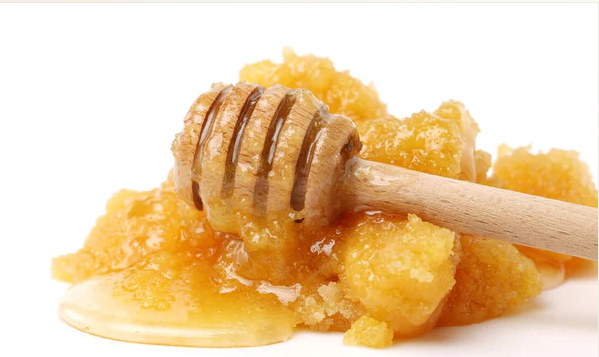
Honey is a mixture of sugars (mainly glucose and fructose), water, and trace amounts of other compounds like enzymes, minerals, and vitamins. When honey crystallizes, it’s because the glucose sugars in the honey begin to form solid crystals. This process is influenced by several factors, including the glucose-to-fructose ratio, temperature, and the presence of pollen or other particles in the honey.
The Key Players: Glucose and Fructose
The main reason for honey crystallization lies in the natural composition of its sugars. Honey is a supersaturated solution, meaning it holds more sugar than it would in its liquid state under normal conditions. Glucose, one of the primary sugars in honey, is less soluble in water than fructose. So, over time, glucose tends to come out of solution and form crystals, especially in cooler temperatures.
Fructose, on the other hand, is more soluble and typically stays in liquid form, which is why honey with a higher fructose-to-glucose ratio (like acacia honey) crystallizes more slowly, if at all. Honey types like clover or wildflower honey, which have a higher glucose content, crystallize faster.
Also Read: Can Honey Help You Sleep Better
Factors That Speed Up Crystallization
Temperature: Honey crystallizes faster in cooler environments, especially when temperatures dip below 50°F (10°C). On the flip side, heat can slow down or even reverse the crystallization process.
Glucose-to-Fructose Ratio: Honey varieties with a higher glucose content are more prone to crystallization. For example, buckwheat honey tends to crystallize quickly, while orange blossom honey stays liquid for longer.
Presence of Particles: Tiny particles of pollen, beeswax, or even dust can act as “seeds” around which the glucose molecules form crystals. The more particles in the honey, the faster it will crystallize.
Is Crystallized Honey Bad?
Not at all! Crystallized honey is still perfectly good to eat. In fact, many people prefer it in this state because of its spreadable texture. It’s simply a sign that the honey is pure and natural—free from artificial additives or preservatives.
If you prefer your honey in liquid form, don’t worry. You can gently warm it up by placing the jar in warm water (around 95°F or 35°C) to dissolve the crystals. Just be careful not to overheat it, as high temperatures can degrade the flavor and nutrients in the honey.
Honey Crystallization: A Sign of Purity and Quality
One of the most reassuring aspects of honey crystallizing is that it’s a hallmark of purity. Unlike some processed honey varieties, which may contain added sugars or preservatives to keep them liquid, crystallized honey often means you’re dealing with raw, unfiltered honey that hasn’t been tampered with. The lack of additives allows the natural sugars and compounds in honey to undergo their natural transformations, providing a more authentic and wholesome product. So, while you might be used to seeing honey in its liquid form on store shelves, crystallized honey is a reassuring sign of a high-quality, all-natural product that has been minimally processed.
Crystallization is a natural, beautiful process that reflects the purity and quality of honey. It’s nothing to be concerned about and doesn’t mean your honey has gone bad. In fact, many people consider it a sign of authenticity. So next time you reach for a jar of honey and find it’s turned solid, embrace it! It’s just part of the sweet, natural cycle of this delicious treat.
Buy Best Quality 100% Real Honey
