
- Empty cart.
- Continue Shopping

When it comes to skincare, individuals with sensitive skin often face the challenge of finding products that won’t irritate or cause flare-ups. Oils, known for their nourishing properties, can be a great addition to a skincare routine, but the question remains: Can oil be applied to very sensitive skin?
In this blog, we’ll explore the benefits, risks, and considerations of using oils on sensitive skin, helping you make informed decisions for your skincare routine.
Understanding Sensitive Skin
Sensitive skin is prone to irritation, redness, and reactions when exposed to certain products or environmental factors. It can be a result of genetics, allergies, conditions like eczema or rosacea, or even lifestyle choices. The skin’s barrier is often compromised, making it more susceptible to irritation from harsh ingredients, fragrances, and some oils.
Why Oils Are Beneficial for Skin
Oils can be a great way to provide moisture, nourishment, and protection to the skin. Many oils contain antioxidants, essential fatty acids, and vitamins that can help to soothe, repair, and hydrate the skin. Some oils, like jojoba and argan, even mimic the skin’s natural oils, making them effective in maintaining balance and preventing dryness.
But while oils can offer significant benefits, they’re not always suitable for very sensitive skin types. Let’s break down the pros and cons of applying oils to sensitive skin.
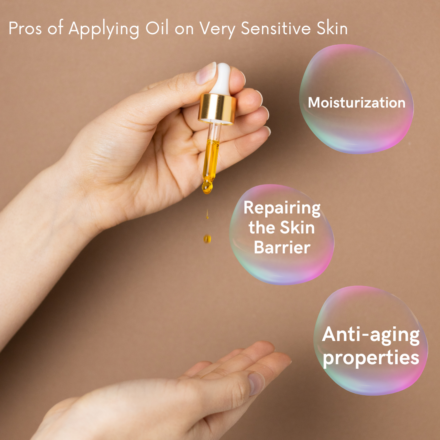
Pros of Applying Oils on Sensitive Skin
- Moisturization
Oils provide an excellent moisture barrier that helps lock in hydration and prevent water loss. For sensitive skin that is prone to dryness or flakiness, oils like jojoba, almond, or squalane can restore moisture and keep the skin feeling soft and smooth. - Soothing Properties
Certain oils, such as chamomile or calendula, have calming effects that can help reduce redness, irritation, and inflammation, making them ideal for soothing sensitive skin after a reaction or flare-up. - Repairing the Skin Barrier
Sensitive skin often has a weakened barrier, leaving it vulnerable to environmental damage. Oils like rosehip or evening primrose oil contain essential fatty acids that help repair and strengthen the skin’s protective barrier. - Anti-Aging Benefits
Some oils, like argan oil, are packed with antioxidants and vitamins that can support skin health and combat the visible signs of aging, such as fine lines and wrinkles, without irritating sensitive skin.
Cons and Risks of Using Oils on Sensitive Skin
- Potential for Allergic Reactions
While natural, plant-based oils are often gentle, they can still cause allergic reactions in some individuals. This is particularly true for essential oils, which are more concentrated and can trigger irritation. Always perform a patch test before introducing a new oil into your skincare routine. - Heavy Oils May Clog Pores
Oils that are too thick or heavy, like coconut oil, may clog pores and lead to breakouts, particularly for those with sensitive or acne-prone skin. It’s crucial to choose oils that are non-comedogenic and lighter in texture, such as sesame, pomegranate, or rosehip oil. - Risk of Over-Oiling
Using too much oil or applying it too frequently can sometimes overwhelm the skin, leading to excess oil production, clogged pores, or irritation. Moderation is key, especially for those with sensitive skin.
Also Read: The Science of Synthetic vs. Natural Skincare Ingredients: Why Natural is Better for Your Skin
How to Safely Use Oils on Sensitive Skin
To ensure that oils work effectively and don’t irritate your sensitive skin, here are a few tips to follow:
- Patch Test
Always conduct a patch test before using a new oil. Apply a small amount of the oil to an inconspicuous area of skin (like behind your ear or on your wrist) and wait 24-48 hours to see if any irritation occurs. - Choose Non-Comedogenic Oils
Opt for oils that are lightweight and non-comedogenic (won’t clog pores). Sesame, pomegranate, and rosehip are great options that are less likely to cause breakouts or congestion. - Use in Moderation
A little goes a long way when it comes to oils. Start with a few drops and gently massage it into your skin. Overuse can lead to unwanted results, such as clogged pores or an oily complexion. - Introduce Oils Gradually
If you’ve never used oils before, start by incorporating them into your routine slowly. Use them once or twice a week and gradually increase the frequency as your skin adjusts. - Opt for Cold-Pressed or Organic Oils
Cold-pressed oils are less processed and retain more of their natural nutrients, making them a good option for sensitive skin. Organic oils are also less likely to contain harmful chemicals or preservatives.
Conclusion
Yes, oil can be applied to very sensitive skin—but it’s important to choose the right oils and use them in moderation. Always do a patch test, avoid oils that may irritate, and be mindful of your skin’s specific needs. When used correctly, oils can nourish, protect, and support your skin, providing deep hydration without causing irritation. By selecting the right products, those with sensitive skin can reap the many benefits that oils have to offer.
So, if you’re ready to add oils to your skincare routine, start slow and choose wisely. Your sensitive skin will thank you!
Buy Organic Cold-Pressed Kumkumadi Face Oil
